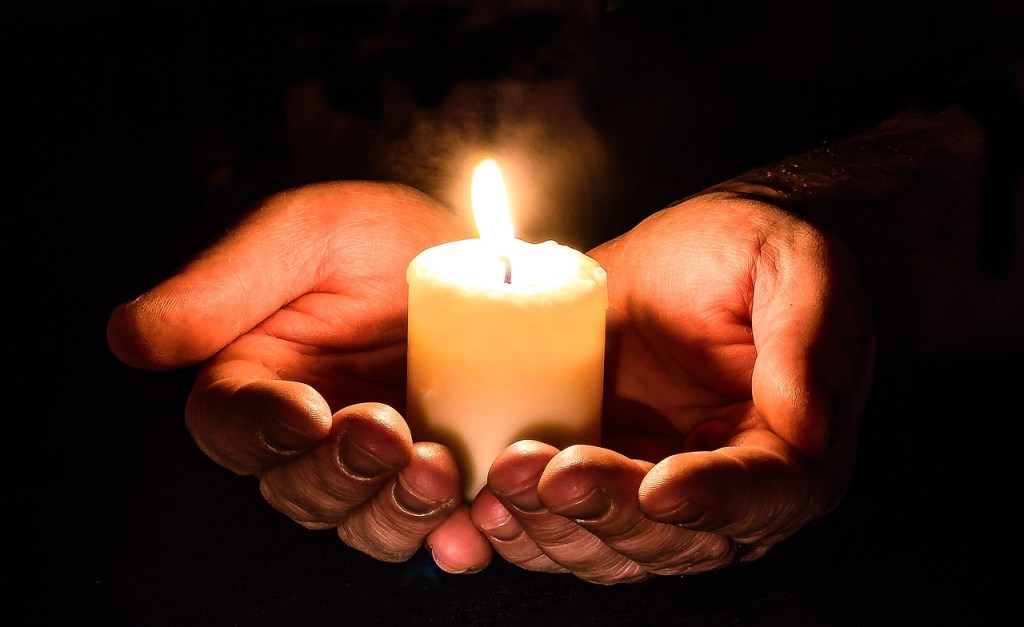
Image by Myriams-Fotos from Pixabay
Romans 8:18-39
18 I consider that the sufferings of this present time are not worth comparing with the glory about to be revealed to us. 19 For the creation waits with eager longing for the revealing of the children of God; 20 for the creation was subjected to futility, not of its own will but by the will of the one who subjected it, in hope 21 that the creation itself will be set free from its bondage to decay and will obtain the freedom of the glory of the children of God. 22 We know that the whole creation has been groaning in labour pains until now; 23 and not only the creation, but we ourselves, who have the first fruits of the Spirit, groan inwardly while we wait for adoption, the redemption of our bodies. 24 For in hope we were saved. Now hope that is seen is not hope. For who hopes for what is seen? 25 But if we hope for what we do not see, we wait for it with patience.
26 Likewise the Spirit helps us in our weakness; for we do not know how to pray as we ought, but that very Spirit intercedes with sighs too deep for words. 27 And God, who searches the heart, knows what is the mind of the Spirit, because the Spirit intercedes for the saints according to the will of God.
28 We know that all things work together for good for those who love God, who are called according to his purpose. 29 For those whom he foreknew he also predestined to be conformed to the image of his Son, in order that he might be the firstborn within a large family. 30 And those whom he predestined he also called; and those whom he called he also justified; and those whom he justified he also glorified.
31 What then are we to say about these things? If God is for us, who is against us? 32 He who did not withhold his own Son, but gave him up for all of us, will he not with him also give us everything else? 33 Who will bring any charge against God’s elect? It is God who justifies. 34 Who is to condemn? It is Christ Jesus, who died, yes, who was raised, who is at the right hand of God,
who indeed intercedes for us. 35 Who will separate us from the love of Christ? Will hardship, or distress, or persecution, or famine, or nakedness, or peril, or sword? 36 As it is written,
‘For your sake we are being killed all day long;
we are accounted as sheep to be slaughtered.’
37 No, in all these things we are more than conquerors through him who loved us. 38 For I am convinced that neither death, nor life, nor angels, nor rulers, nor things present, nor things to come, nor powers, 39 nor height, nor depth, nor anything else in all creation, will be able to separate us from the love of God in Christ Jesus our Lord.
Luke 18:1-18
Then Jesus told them a parable about their need to pray always and not to lose heart. 2 He said, ‘In a certain city there was a judge who neither feared God nor had respect for people. 3 In that city there was a widow who kept coming to him and saying, “Grant me justice against my opponent.” 4 For a while he refused; but later he said to himself, “Though I have no fear of God and no respect for anyone, 5 yet because this widow keeps bothering me, I will grant her justice, so that she may not wear me out by continually coming.”’ 6 And the Lord said, ‘Listen to what the unjust judge says. 7 And will not God grant justice to his chosen ones who cry to him day and night? Will he delay long in helping them? 8 I tell you, he will quickly grant justice to them. And yet, when the Son of Man comes, will he find faith on earth?’
Sermon
Over these few weeks, we are thinking about our purpose – to glorify and enjoy God, to share God’s goodness and love by being rooted in Jesus – and thinking about the different practices and rhythms which Christians have throughout the ages to help them as they follow Jesus and share God’s love. Last week, we thought about worship. This week we are thinking about prayer.
Now prayer is a big topic. We have had five week lent courses on prayer and only scratched the surface! There are many sorts of prayer: prayers of adoration and praise, prayers of thanksgiving, prayers of confession and lament – indeed we have had lots of different types of prayer and our service is less than halfway through. And there are many different ways of praying: you can pray alone or with others, using words or music or silence. You can pray with prayer beads or when knitting or while walking. You might write your prayers in a journal or make them into a piece of art. Prayer is as a varied as the people who pray, but all prayer draws us into the current of God’s love and grace; all prayer tunes us into the frequency of God’s kingdom or justice and peace; all prayer nestles us closer to God’s heart.
So today, I want to focus on one sort of prayer. The church calls it intercessory prayer, but that is just a fancy way of saying prayer that is FOR something: ourselves, our world, our church, our friends and family and more. It is when we ask God to help. It is when we invite God into a situation believing God can and will make a difference. We pray prayers of intercession at every act of public worship – they are really important. Prayer is one of the ways we serve God and God’s world.
But prayer FOR is a bit of a paradox. By that I mean that there are a whole bunch of things that are true about praying for ourselves and others that are true, but which don’t fit easily together.
The first paradox is prayer and action. So Pope Francis once said something like: you pray for the hungry and then you feed them – that is how prayer works. And he is right – sometimes we are to be the answers to our own prayers. Sometimes our prayers for a situation simply give us the courage and commitment to do what we know needs to be done. In the book of James, thought to be written by Jesus’ brother and it certainly has more than a dash of Jesus’ straight-talking tone, it says that there is absolutely no point in saying to people “be clothed and well fed” if we aren’t prepared to give them food and clothing! Prayers for God to act when we aren’t prepared to act ourselves are probably not the most compelling. There is another quote I love: pray as if prayer is the only thing that works and then work as if work is the only things that works!
But we are also called to pray for things we cannot deliver ourselves. There are some situations where we cannot practically help, some where we don’t know enough to help, but by inviting God into the situation, by asking God to do something, we HAVE done something important. And that is the first paradox: where possible prayer should be accompanied by action, but sometimes prayer IS the only action we can take, and it is vitally important. Never think that a whispered prayer for someone unknown as an ambulance siren wails by, or a heartfelt cry for someone on the nightly news experiencing suffering or a desperate plea for a loved one who is struggling is worthless. You have asked the God of Eternity to care for them – you have given them something beyond human efforts.
When we pray for, not only have we done something important, we have done something risky. How will God respond? Not every prayer is answered in the way we expect. Not every prayer is answered in a way we will ever even be aware of! And so we encounter our second paradox: how do we hold on to the fact that every prayer is heard, every heartfelt request held by God and yet God does not always respond as we expect?
In our Gospel reading today, we have a poor widow who continually presents her requests for justice to an extremely unjust judge. Finally, through sheer pester power she gets a response. I think this reading has been misused by the church over the years. They have made it about the woman, and her persistence, and suggested that those of us who have not received an answer to our prayer just haven’t been praying hard enough. But I don’t think that is what Jesus was saying. He wasn’t talking about the woman, but about God. If even a corrupt and lazy judge will give justice when asked, how much more will God respond to the heartfelt and committed prayers of God’s people. Jesus finished with a slightly odd remark by asking if when he returns he will find faith on earth.
Which links to our first reading, where Paul says that hope that seen is not hope. It echoes the first verse of Hebrews 11: Now faith is the assurance of things hoped for, the conviction of things not seen. God is not a heavenly vending machine where if we put the right prayer in, we get exactly what we desire out. Rather we pray in faith: faith that God is loving and good, and faith that our prayer to God makes a difference.
Jesus knew about unanswered prayer. In the garden of Gethsemane, praying so hard he sweated blood, he asked God to change what lay ahead of him. What lay ahead of him didn’t change – it couldn’t if he was to fulfil the salvation of creation – but he did receive the strength to endure, to continue his path in love and faith. And what lay ahead of him had meaning beyond imagining. We can never know the whole story – we don’t know how our prayer has helped, even if we do not see the result we longed for. The poet, Alfred Tennyson, once wrote: More things are wrought by prayer than this world dreams of.
When Jesus returns, will he find a church full of people faithful in prayer? Will we continue to present our requests and prayers to God even when the response isn’t what we expect, what we sometimes so desperately want? Will we have faith that God is good, even when circumstances are difficult?
As a church, we demonstrate this faith by praying each week for the needs of our world, our church, our community and those known best to us. We also have people in the congregation who pray regularly for people in need of longer term prayer support, and people who will get a text alert and pray for people in an emergency. It might be that you would like to be involved in supporting our shared prayer life by volunteering to lead prayers on a Sunday, pray for people throughout the week or be an emergency prayer in a crisis.
Prayer is a shared task, but also one we can undertake alone throughout the week. Although, even when we do pray alone, we are never alone. Our reading from Romans reminds us that when we simply don’t know what to say, God’s Spirit prays for us and in us with groans too deep for words. I find this such a comfort in prayer – that when something is too heavy or heartbreaking for me to even know what to ask, I can simply hold the situation and my emotions before God and know that God understands.
Prayer doesn’t need fancy words or expertise in religiousness. It needs a caring and faithful heart. All you need to do is notice – and then to bring your concern for a situation before God, in faith that it will make a difference.
So this week, the challenge is to make time to pray for others regularly. Pick a time and way that works for you, but try to remember before God those in need. You may even feel prompted to tell someone you are praying for them – be courageous and kind and see what happens. But remember that as the Benedictines say, prayer is work, prayer is action and prayer might be one of the most amazing things you can offer a person or a situation today.

 Sermons at St Paul's