Readings are Genesis 12:1-4a and John 3:1-17
In my journey of faith, I have travelled with many different church denominations. I was brought up in the Church of Scotland, which is most like the URC down here, my best friend as a teenager was Assemblies of God, at university I worshipped with the Baptists and married into a Roman Catholic family. Coming to England, we found ourselves at the Church of England and then at theological college, I studied alongside Methodists and Pentecostal Christians and did a placement with the Quakers. I think I just need a stint with the Orthodox and the Salvation Army and I will have completed my denominational Bingo card!
At some of the denominations I have travelled with, people would often talk about being born again – which is the other way the phrase we read in our Gospel as born from above can be translated. Some of the other denominations I travelled with were a bit sniffy about the phrase “born-again”, but I have never had a problem with it. It is a profoundly biblical concept. Christians are born again by water and the Spirit – we have new life in Christ, and whether that begins in infancy, as a child, as a young adult or in riper years is irrelevant. I think the disagreement rests in how people think being born again happens.
To some being born again is quite simple – you accept Jesus as your Lord and Saviour, pray a prayer, get baptized as an adult or older child and there you go: new you, fresh start, new life, born again.
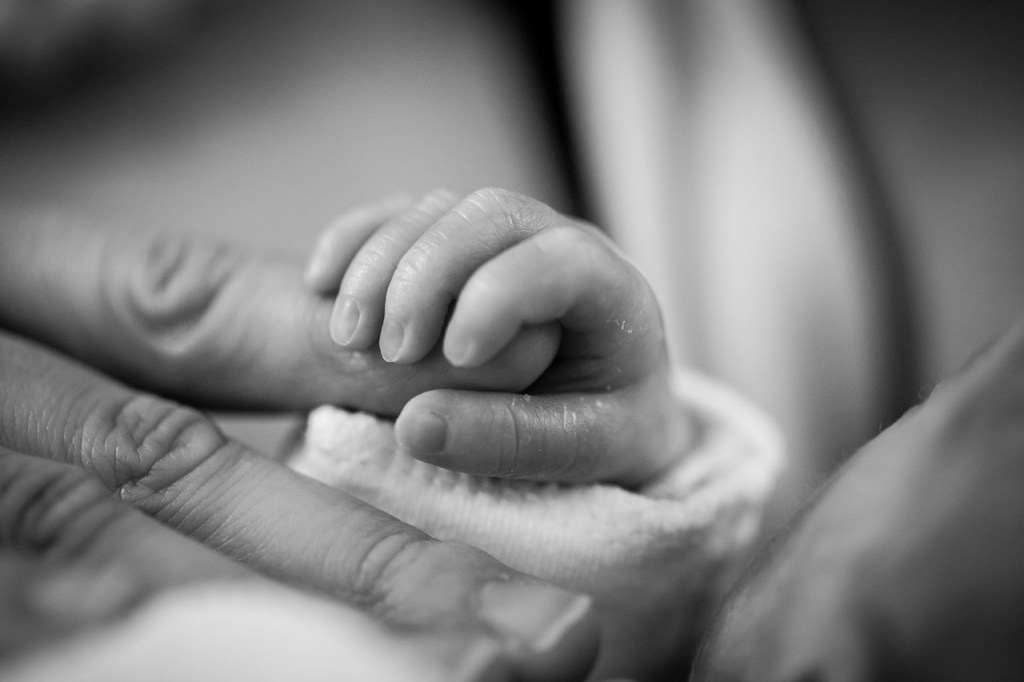
But being born is a little bit more complicated than that. Nowadays, most birth takes place in a maternity unit, with trained professionals and useful medical kits on standby if needed. Unless you happen to be a healthcare worker, you are unlikely to be around when someone is giving birth unless it is your own birth, or you or someone very close to you has happened to have given birth. Not so in Jesus’ day. Back then, births happened in the community and were much more communal affairs. While as a young man, Jesus would have been unlikely to be involved closely in the process, he would have been unable to avoid birth – it would have been happening all around him. He would be familiar with birth as a messy, sometimes noisy, time-consuming, painful and ultimately joyful process. What if when he speaks of being born from above, born of the Spirit, born again, he had something like that in mind?
If he did, then being born again, being birthed into the person God intends us to be might be more of a process than an event. But of course, every birth is individual – some are quick, some take days, some are relatively straightforward, some are fraught with risk and complexity. Why should our spiritual birthing be any different? There are indeed some Christians who accept Jesus, get baptised and are instantly different, better, happier people – hallelujah! What I suppose I am saying to you today is that if your spiritual journey doesn’t fit that pattern, if it seems protracted and messy, if – a bit like the waves of contractions in labour – God seems to have to teach you the same lessons over and over again, if it all seems a bit scary or painful in places, don’t despair. You are not failing in your faith – you are just having a different spiritual birth. And as with any birth, there is hope and new life ahead.
Nicodemus was one of the more protracted spiritual birth people. We see him here at the beginning of John’s Gospel, visiting by night so he won’t be seen, finding something attractive in Jesus, but scared for the loss of reputation of worse that might come from being associated with him. Jesus asks him some difficult questions, and Nicodemus doesn’t seem to know what to do with them! But he keeps going in his own way, and at the end, when Jesus has died on the cross, when his disciples have fled, Nicodemus is one of the ones who goes to Pilate and asks for Jesus’ body and lays it in a tomb. What courage. What faith.
Being birthed into the person God intends us to be is a scary process. Probably if we knew where it would lead us at the beginning, we would run a mile. If Nicodemus has known this journey would result in him aligning himself with a recently executed criminal, I am not sure he would have started. The process of leaving the snug safety of a womb to enter the dangers and opportunities of the wider world is a huge thing – no wonder newborns cry out in shock. Likewise, the nudging of God which sends us out of our comfort zones and into new adventures can be uncomfortable.
Our first reading is a good example of this. Abram is being sent on a journey. We know the whole story. We know the joys and challenges, heartache and triumphs which lie ahead for him and his wife, Sarah. We know that the man’s friendship with God is at the start of a salvation story which one day leads to Jesus. But at that point, Abram only knows he must go. God doesn’t tell him what will happen if he does go – God only makes this promise: if Abram goes, God will bless him and make him and his family a blessing.
That same invitation and promise is for you and me. Will we continue and cooperate ths process of letting the Holy Spirit birth us into the people God longs for us to be – even if it is messy, painful, unknown. Will we do this, trusting that if we do, God will bless us and make us a blessing, that there is new life and hope ahead.
Lent is a particular time of learning and growing in faith. It is a time when we take stock, look at where we are and where we hope to be. Doing that honestly is not always a fun experience. The anticipation of Advent, the joys of Christmas or Easter, the thankfulness of Harvest – all can be much easier than the self-examination and penitence of Lent! But maybe this Lent invite God to show you where the Spirit wants to birth something new in you this year, be open to the mess and muddle this process might take. But always know that God will use this to bless you and others and bring new life. Amen

 Sermons at St Paul's